Porto on Foot: A Self-Guided Walk Through History
Hello, fellow wanderers, and welcome to Oporto Weekly. As your editor, Baris, I’m often asked for the single best way to truly understand our city. My answer is always the same: walk. To walk through Porto is to read its history, chapter by chapter, one cobblestone at a time. The grand avenues tell tales of wealth and ambition, while the narrow, winding alleys of the Ribeira whisper secrets of sailors and merchants from centuries past.
There’s a certain magic you can only find at a walking pace—the scent of roasting chestnuts in the air, the sound of a fado melody drifting from an open window, the sight of colourful laundry fluttering like prayer flags between ancient buildings. So, I’ve put together my favourite self-guided walking tours for you to use in 2025 and beyond. Lace up your most comfortable shoes, and let’s explore the heart of Porto together.
Tour 1: The Classic Porto - From the Center to the Cais da Ribeira
If you have just one day and want the quintessential Porto experience, this is the walk for you. It’s a journey of about 5 kilometres that weaves through the city’s most iconic landmarks, from the grand civic heart right down to the historic riverside. It’s a full day’s adventure, so take your time, stop for a coffee, and soak it all in.
Start: Praça da Liberdade (Liberty Square)
Our journey begins in Porto’s grand living room, the Praça da Liberdade. Flanked by majestic buildings and centered around the monument to King Peter IV, this is where the city’s modern pulse beats strongest. At the top of the square stands the imposing Porto City Hall (Câmara Municipal do Porto), located at Praça Gen. Humberto Delgado, 4000-407 Porto. Its 70-meter clock tower is a key feature of the city’s skyline. While you can only peek inside the ground floor, the real spectacle is the architecture and the bustling atmosphere of the square itself.
São Bento Train Station: A Tile-Covered Masterpiece
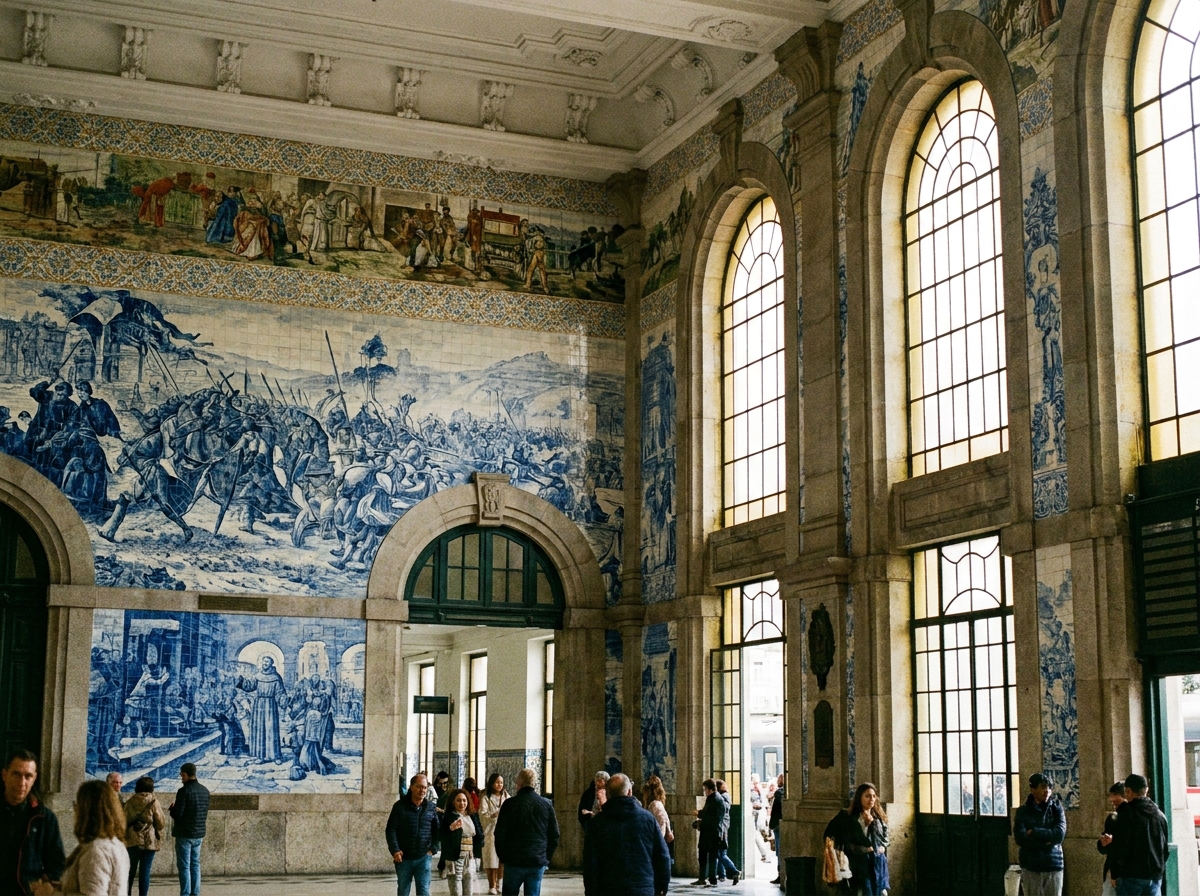
A few steps from the square lies what I believe is the world's most beautiful train station. Don’t just pass through São Bento Train Station (Praça de Almeida Garrett, 4000-069 Porto); step inside the main hall. You’ll be greeted by over 20,000 magnificent azulejo tiles that depict epic scenes from Portuguese history. It’s a breathtaking, and completely free, art gallery that tells the story of our nation in shades of blue and white.
Clérigos Tower: The View from the Top
From São Bento, it’s a short, uphill walk to a true symbol of Porto: the Clérigos Church and Tower (Rua de São Filipe de Nery, 4050-546 Porto). This magnificent Baroque bell tower stands 75 meters tall, watching over the city. Now, I must be honest—the climb is 240 steps. But the reward is an unparalleled 360-degree panoramic view of Porto's terracotta rooftops, the winding Douro River, and the distant sea. For 2026, a daytime ticket for the tower and museum will be around €8-€10. If you’re visiting in the high season, a nighttime visit (€5) offers a truly magical perspective.
Livraria Lello: A Temple for Book Lovers
Just around the corner is a place of pilgrimage for bibliophiles and Harry Potter fans alike. Livraria Lello (Rua das Carmelitas 144, 4050-161 Porto) is a feast for the eyes, with its neo-Gothic façade, stained-glass ceiling, and that famous, sinuous red staircase. It truly feels like a place where magic is real. My practical tip: this is one of Porto’s most popular spots. To avoid the legendary queues, book your voucher online in advance. The entrance voucher for 2026 is expected to be €8-€10, which is happily deductible if you buy a book. A "skip-the-line" ticket for around €16, which includes a book, is an even better option for those short on time.
Porto Cathedral (Sé do Porto): A Fortress of Faith
Next, we head to the city’s spiritual birthplace, the Porto Cathedral (Terreiro da Sé, 4050-573 Porto). Perched on a hill overlooking the river, this 12th-century Romanesque cathedral looks more like a fortress than a church. The main building is free to enter, but I highly recommend paying the small €3 fee (2025 price) to visit the Gothic cloister. Its walls are covered in stunning blue and white azulejos, offering a peaceful respite and gorgeous views from the terrace.
Finish: The Ribeira District
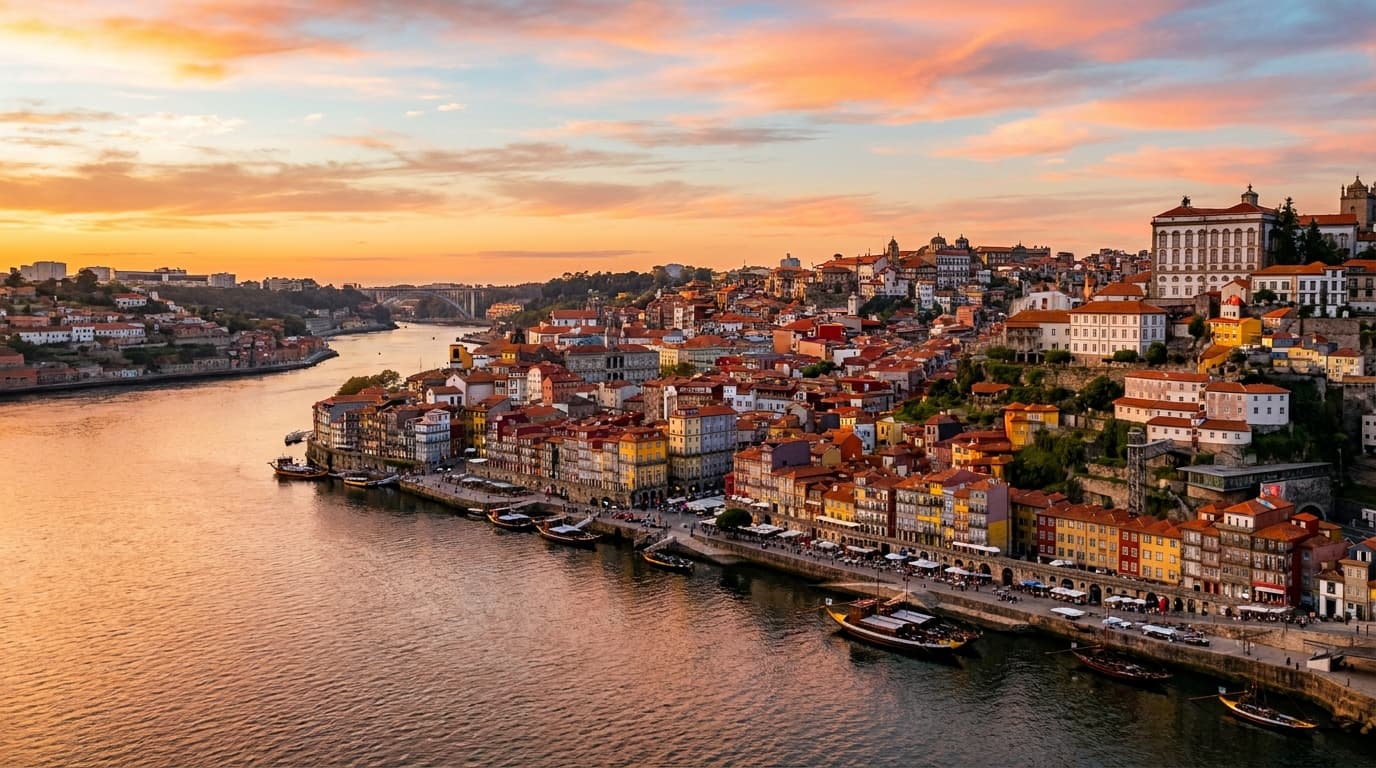
From the heights of the cathedral, it's a delightful descent through a maze of medieval streets and stairways into the Ribeira District. This is the historic soul of Porto and a UNESCO World Heritage site. Find your way to the Cais da Ribeira, the vibrant riverside promenade. Here, tall, narrow houses painted in a rainbow of colours lean against one another, their reflections shimmering in the Douro. Find a seat at an outdoor café, order a glass of crisp vinho verde, and simply watch the world go by. This, my friends, is Porto.
Tour 2: The Gilded and the Grand - A Journey Through Porto's Wealth
This second route is shorter but no less spectacular. It delves into the opulent history that financed the city’s grand architecture, focusing on the incredible wealth generated through trade and, of course, Port wine. It’s a tour of gilded interiors and breathtaking views.
Start: Palácio da Bolsa (Stock Exchange Palace)
Begin at the magnificent Palácio da Bolsa (Rua de Ferreira Borges, 4050-253 Porto), a 19th-century temple to commerce. From the outside, it’s a stately neoclassical building, but the interior is where the true splendour lies. You must join a 30-minute guided tour to see it, which for 2025-2026 will cost about €12-€14, but it is worth every cent. The tour culminates in the Arab Room, an oval-shaped hall inspired by Granada’s Alhambra, so lavishly decorated in gilded stucco that it will leave you speechless.
Church of São Francisco: The Golden Church
Right next door is a perfect example of why you should never judge a book by its cover. The Church of São Francisco (Rua do Infante D. Henrique, 4050-297 Porto) has a rather austere Gothic exterior. But step inside, and you’ll find one of the most jaw-droppingly ornate church interiors in all of Europe. An estimated 400 kilograms of gold leaf cover nearly every surface in a breathtaking display of Baroque exuberance. The 2026 entrance fee of around €7.50 also includes the catacombs and a museum.
Interlude on Rua das Flores
After such overwhelming opulence, a gentle stroll along Rua das Flores (Street of Flowers) is the perfect antidote. This charming pedestrian street is one of my favourites, lined with lovely boutiques, traditional shops, and historic buildings with beautiful ironwork balconies. It’s the perfect spot to grab a coffee and a pastel de nata and simply enjoy the local atmosphere.
Finish: Across the Dom Luís I Bridge to Gaia
Our final leg takes us across an icon of Porto: the Dom Luís I Bridge. For the best experience, take the upper deck. The panoramic views of the Ribeira on one side and the Port wine cellars of Vila Nova de Gaia on the other are simply unforgettable. Once across the river in Vila Nova de Gaia, you are in the heart of the Port wine trade. Historic lodges, or "caves," bearing famous names like Sandeman, Taylor's, and Graham's, line the riverbank. Most offer guided tours explaining the fascinating process of making Port wine, followed by a delicious tasting. In 2026, you can expect tour and tasting prices to range from €14 to €29, depending on the house and the quality of the wines you sample.
My Top Tips for Your Porto Walking Adventure
Before you set off, here are a few final pieces of advice to make your self-guided tour as enjoyable as possible:
- Wear Comfortable Shoes: I cannot stress this enough! Porto is a city of hills and cobbled streets. Your feet will thank you.
- Time Your Visit: To avoid the summer crowds and heat, consider visiting in the spring (April-May) or autumn (September-October). The weather is lovely, and the city is a bit more relaxed.
- Book Key Attractions in Advance: For incredibly popular sites like Livraria Lello and Palácio da Bolsa, booking your tickets online a day or two before can save you hours of queuing.
- Consider the Porto Card: If you plan on visiting many museums and using public transport, the Porto Card might be a cost-effective option, offering free or discounted entry to many attractions.
Whatever path you choose, the most important thing is to allow yourself to wander. Let the city guide you. Turn down that intriguing alley, peek into that open courtyard, and listen to the stories the stones have to tell. Happy walking!
Coming up in Porto
- 🌙 Fado in Historic Venues15–21 Oct 2026 · Various Locations · Booking recommended
- 👨👩👧 Six Bridges Cruise15–21 Oct 2026 · Douro River · From €15
- 🍷 Mindi Abair's Wine & Jazz15–23 Oct 2026 · The Yeatman Hotel · Booking required
- 🎨 Porto Contemporary Art Exhibition5–25 Oct 2026 · Various Galleries · Mostly Free
- 🎨 Porto Contemporary Art Exhibition15–25 Oct 2026 · Bombarda Art District & Various · Free